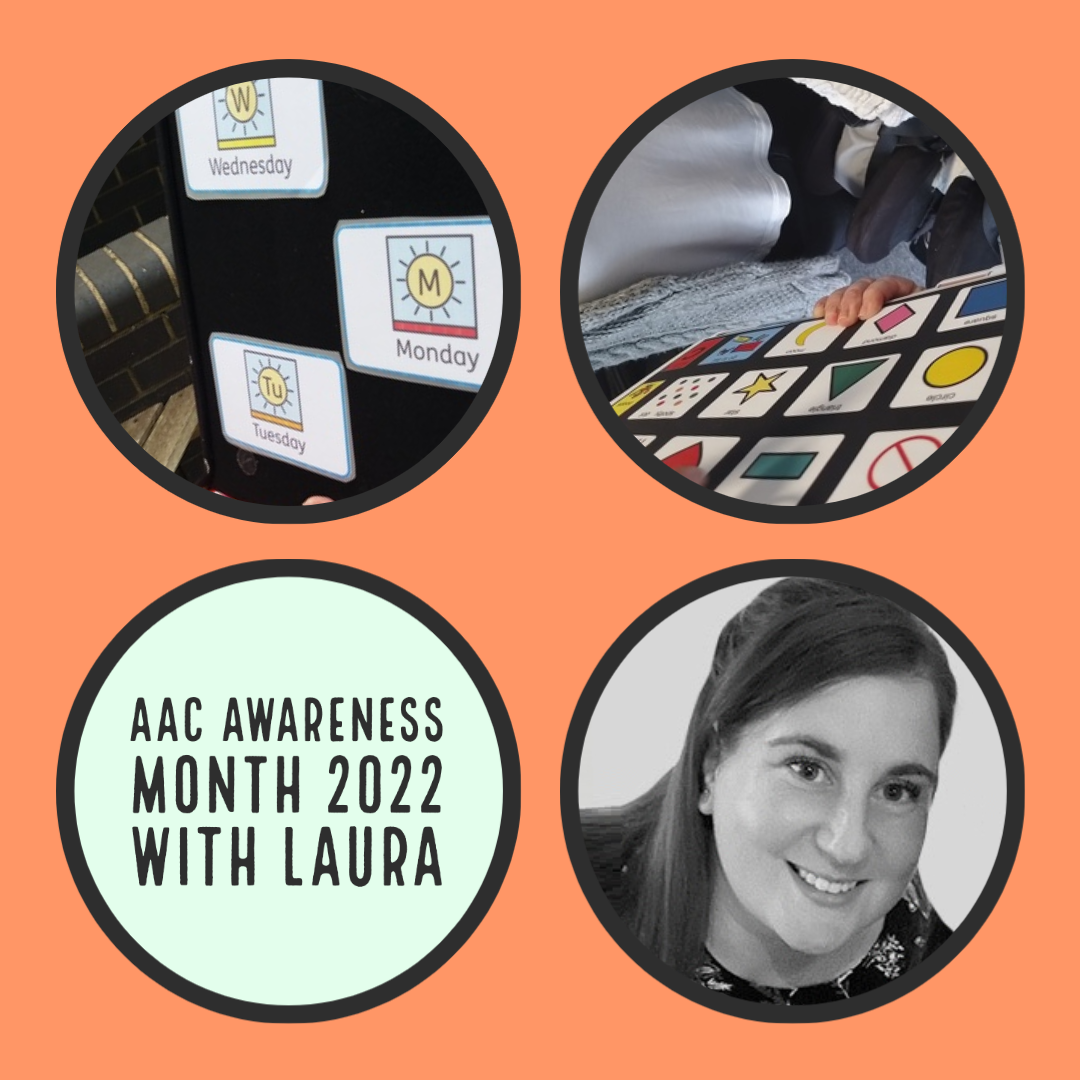
AAC Awareness Month 2022 with Champion Laura
We're celebrating AAC Awareness Month in October 2022 to try to help raise the profile of adapted methods that help us communicate with people of all communicative abilities. We asked Laura who advises the team as AAC Champion alongside her foster care of three delightful children with her partner Alex to write for us to explain AAC, and this is what she wrote:
What is AAC?
AAC stands for Augmentative and Alternative Communication.
The first 'A' in AAC stands for Augmentative Communication. When you augment something, you add to it, or supplement. Augmentative communication is when you add something to your speech. This can make your message clearer to your listener.
The second “A” in AAC stands for Alternative Communication. This is when you are not able to speak. It is also when your speech is not understood by others. In this case, you need a different way to communicate.
In simpler terms, AAC can be tools, systems, devices or strategies. These tools help a person communicate when they cannot rely on speech.
(adapted from: Beukelman, D., & Mirenda, P. (2013))
The use of AAC is fundamental to the work that the Fostering Together staff team, Foster carers and support workers do, every day. To enable meaningful communication exchanges with Children and Young People all adults working with the children must be able to use the child’s own AAC system. There is no ‘one size fits all’ approach.
During September 2021 the Fostering Together staff team attended a training course on an introduction to communication and AAC. They had a theory session about the basics of communication. They then had a hands-on session with AAC systems. As Fostering Together’s AAC champion I devised and delivered this training to be bespoke and specific for the children and young people within Fostering Together, using examples from interactions both I and they have already had with children fostered by families in our network.
At Fostering Together, we strongly believe that every child has the right to be heard and be provided with the best bespoke communication tools. Although this involves a degree of flexibility within the staff team, this is a truly child focused approach to communication.
Case Study of Lenny
When Lenny arrived in our care, he had very limited communication. The professionals working with him believed that he was functioning at an incredibly low level, and they questioned whether he was capable of using his vision.
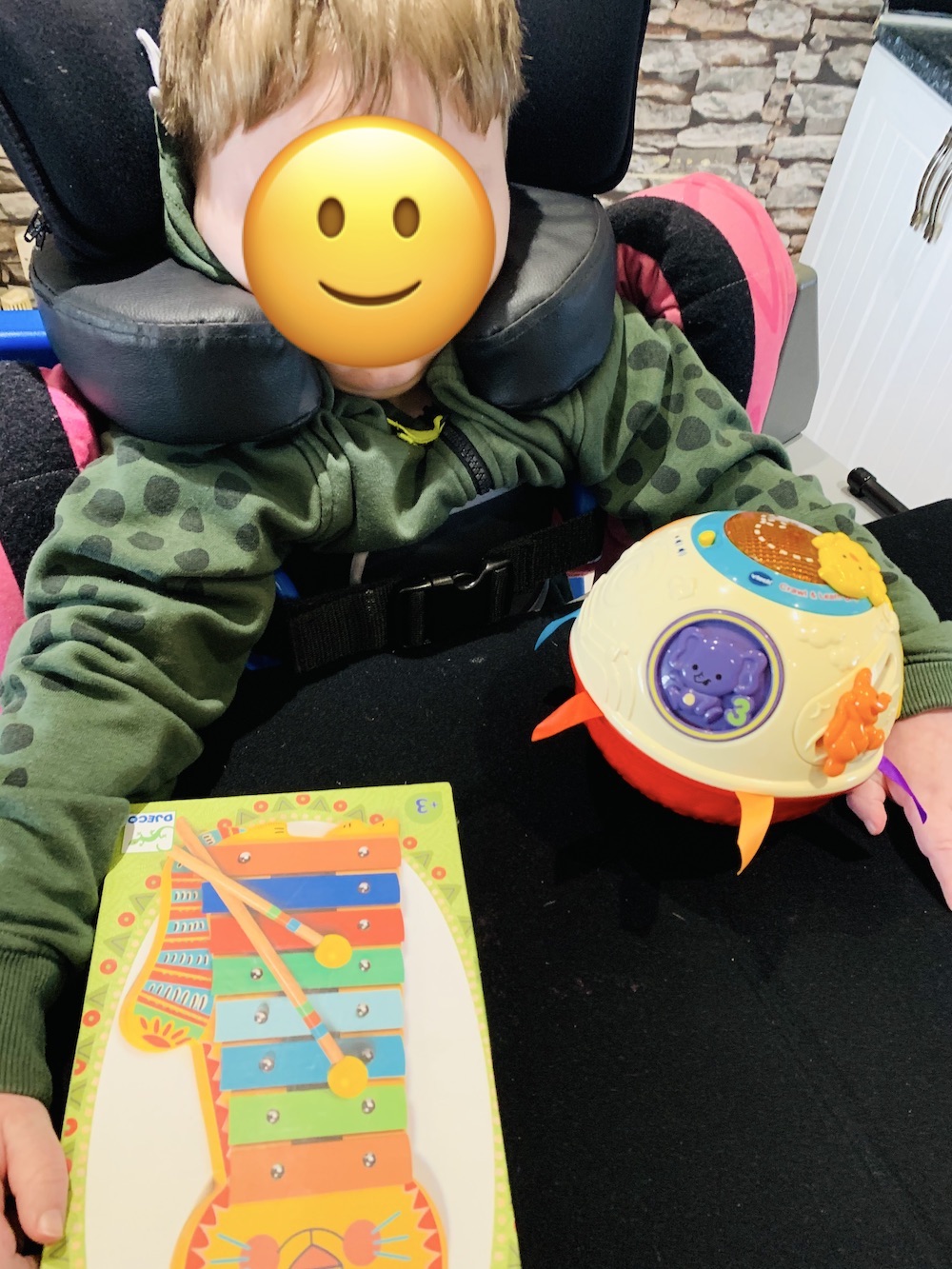
Fast forward 5 years and Lenny can now communicate using the total communication approach. He can make meaningful choices about things which directly affect him. He can contribute to conversations using auditory and visual scanning techniques. He can tell those around him his wants, wishes, interests and feelings. He has developed ways to tell people he would like them to go away or come closer. He can now identify the weather, numbers, days of the week. Is enjoying learning about nature, the life of dinosaurs, history and geography. He can tell people when he is in pain, uncomfortable or just very excited!
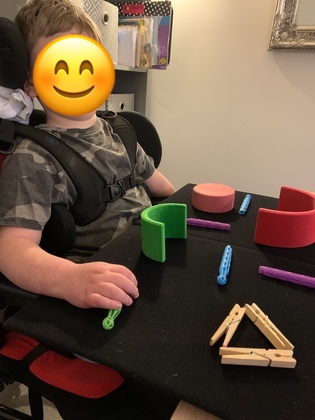
He is doing all this whilst still being non-verbal.
Lenny’s journey to communication has been long, hard work and so rewarding.
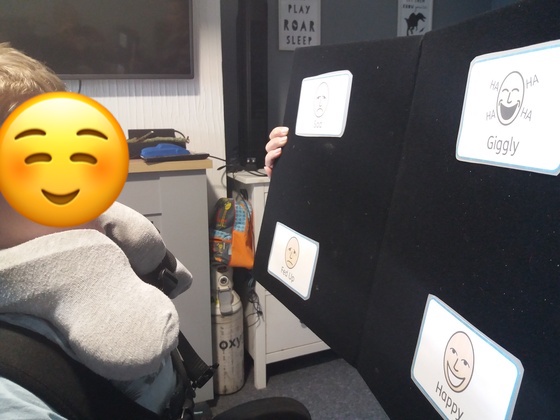
He began using objects of reference and sounds of reference in anticipation of events and activities. We simultaneously worked on Lenny being able to focus his vision on bright objects on a black background (high contrast) and developing cause and effect with his voice. Learning to use his voice to get attention. Through the use of intensive interaction Lenny learnt various vocal sounds and tones enabling him to use his voice to engage and be heard.
When it was recognised that he could manage these things we moved on to basic choice making with real life objects. Starting with very bright sensory toys vs something boring…such as a wooden spoon! It was soon established that Lenny could make meaningful choices for motivating reasons. We continued this work for a couple of years – slowly the adults around him learnt that Lenny wanted to make meaningful choices about all sorts of things, not just which toy to play with.
In 2019 Lenny moved onto photographs and symbols. Beginning with photographs and then once it was recognised that he could manage these, we swapped to symbols. We haven’t looked back. During this time, he has also explored eye gaze games (to continue to strengthen the eye muscles), learnt to say ‘yes’ and ‘no’ using his eyes and developed an auditory scanning system, where Lenny could answer questions, make choices and comments.
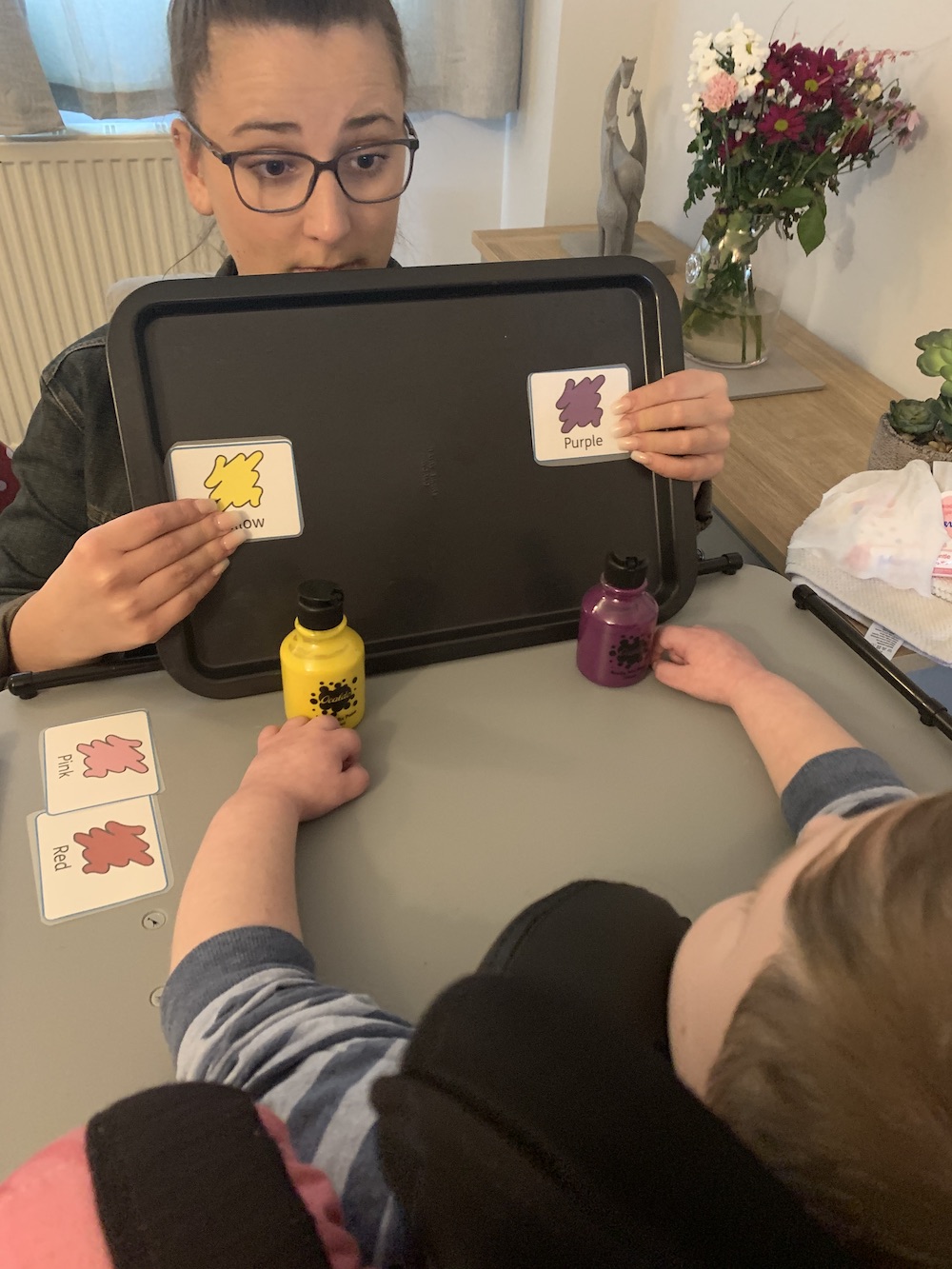
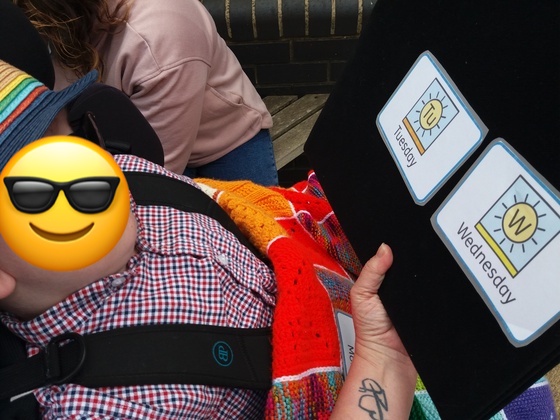
At last Lenny seemed to feel like he could have his voice heard in a meaningful way.
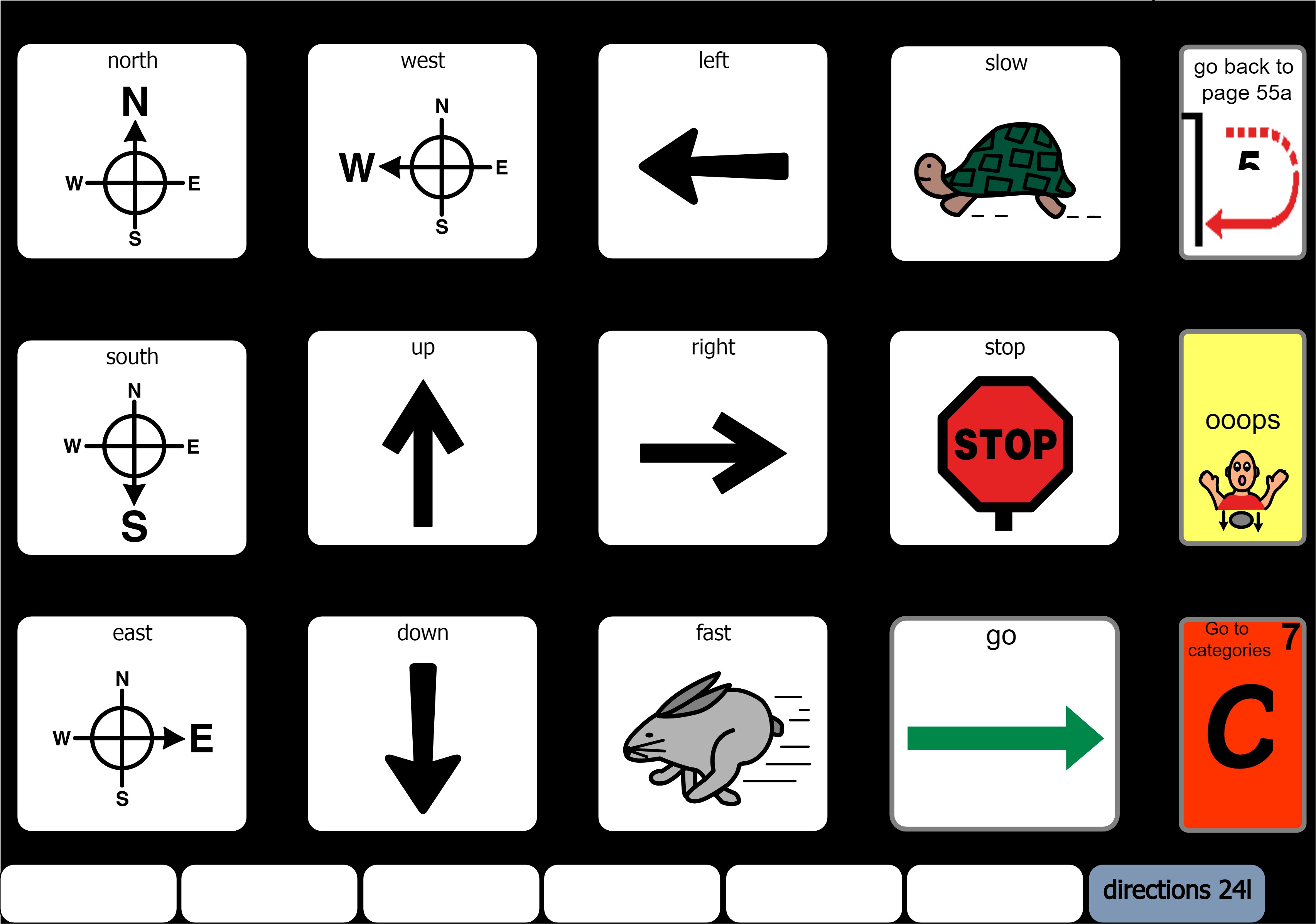
Currently Lenny continues to use a well set up AAC system including the following
- Auditory Scanning
- Eye Pointing
- Yes / No
- PODD Books (Pragmatic Organisation Dynamic Display)
- Sounds of reference
These developments happened because AAC is available to children and young people.
Without AAC Lenny could still be a child who it was thought had incredibly low function. He could be a very frustrated little boy…imagine wanting to contribute and join in with conversations but not having your voice to speak, or the ability to write. Instead, he is a child who has proven to the world that he is intelligent, cheeky and has a thirst for being involved.
With Lenny, communication could only be properly explored alongside the management of his medical conditions. Had we have not worked as part of a large Multi-Disciplinary Team we wouldn’t have been able to stabilise his medical conditions, to allow him to show the world what a true star he is, and how proud we are to have such a fantastic non-verbal communicator.